The Vaccine Integrity Project consults a Board of Advisers, which serves in an advisory — not governing — capacity. These advisers are subject matter experts from diverse backgrounds who provide a wide range of perspectives. The opinions, findings, conclusions, and recommendations issued by the Vaccine Integrity Project do not necessarily reflect the views of its advisers or the organizations they represent.
Ziyad Al-Aly, MD

Ziyad Al-Aly, MD, is a physician-scientist serving as the Chief of Research and Development Service at the VA Saint Louis Health Care System and as a senior clinical epidemiologist at Washington University in Saint Louis. He directs the Clinical Epidemiology Center, where he leverages massive real-world datasets to identify and rigorously address knowledge gaps related to some of the most pressing public health challenges of our time—generating the evidence required to inform clinical practice and public health policy.
Dr. Al-Aly is widely recognized as the leading scientific voice on the long-term health effects of COVID-19 (Long COVID). His laboratory produced the first systematic characterization of the condition, documenting the virus’s multi-systemic risks across cardiovascular, neurologic, and metabolic domains. Crucially for vaccine policy, his research provides seminal evidence on the effectiveness of COVID-19 vaccines in reducing the risks of acute and long-term sequelae of SARS-CoV-2 infection. His laboratory continues to evaluate the contemporary effectiveness of updated vaccine formulations, ensuring that policy recommendations are grounded in the most current epidemiologic data.
A Clarivate Highly Cited Researcher with over 150,000 citations, Dr. Al-Aly has shaped public health policy at the highest levels. He has testified before the U.S. Senate on Long COVID and Co-Chaired the U.S. Government’s National Research Action Plan for Long COVID. In 2024, he was named to the inaugural TIME100 Health list of the most influential people in global health. His work is published in prestigious medical journals and frequently featured in major media outlets in the U.S. and globally.
Bechara Choucair, MD

Dr. Bechara Choucair is a board certified family physician with a Masters in Health Care Management and more than 25 years of public health, health care, and environmental sustainability leadership in governmental, not-for-profit, and for-profit sectors.
Dr. Choucair currently serves as executive vice president and chief health officer for Kaiser Permanente, the nation’s largest integratedhealth system with more than 12.5 million members. In this role, he oversees the organization’s Medicaid line of business, covering over 1.5 million members. He also drives initiatives to increase access to care and improve health outcomes for those enrolled in both Medicaid and Medicare. Dr. Choucair is additionally responsible for Kaiser Permanente’s community health and social health portfolios, including the creation of the nation’s largest social health network to address housing, food and transportation needs. He manages a multi-billion-dollar portfolio to support medical financial assistance and charitable health coverage programs, as well as grants to community health programs throughout the Kaiser Permanente footprint.
In 2021, Dr. Choucair served as the White House national COVID-19 vaccinations coordinator, leading the nation’s vaccination effort. During his tenure, nearly 500 million doses of the vaccine were administered nationwide. Dr. Choucair also served as Chicago’s Public Health Commissioner from 2009 to 2014. He has earned a number of awards, including being named by Modern Healthcare as one of the 50 Most Influential Health Executives in the United States, one of the Most Influential People in Healthcare, one of the Top 25 Innovators in Healthcare, and one of the Top 25 Minority Healthcare Executives.
Sarah Despres

Sarah Despres has over 25 years experience on the front lines of public health policy. A lawyer by training, she worked as a counsel on the Senate Government Affairs Committee, the House Government Reform Committee, and the Energy and Commerce Committee. She spent 10 years directing government relations for the public health portfolio at the Pew Charitable Trusts. She was a counselor to HHS Secretary Becerra for Public Health and Science from January 2021 through January 2025. She is currently a consultant working with non-profit organizations on immunization issues.
Katy Evans, PhD

Katy Evans is Senior Director of the Health Justice Program at the FrameWorks Institute. In this role, she sets strategic direction for the program and manages FrameWorks' research, application, and communication to strengthen the field through advancement of policy and systems change. Along with her team, Katy identifies and shifts cultural mindsets that impede efforts to advance a vision of health equity. Through this work, the Health Justice Program equips movement builders and social change organizations with the tools they need to communicate more effectively about the issues that matter.
Before joining FrameWorks in 2025, Katy served as the Senior Program Officer at the de Beaumont Foundation where she led the foundation’s efforts to strengthen public health partnerships and improve health communications. Katy sits on the Advisory Board of the Harvard-Meharry Creator Program and the Urban Institute's Commission on Anti-Racism in Solidarity. She holds a PhD in American Studies from Boston University, an MA from Kings College London, and a BA from Boston College and was recognized as a 2022 Terrance Keenan Fellow.
Harvey Fineberg, MD, PhD

Harvey V, Fineberg MD, PhD recently stepped down as president of the Gordon and Betty Moore Foundation. He serves as vice president of the American Philosophical Society and previously served as president of the U.S. Institute of Medicine (now National Academy of Medicine) as provost of Harvard University, and as dean of the Harvard T.H. Chan School of Public Health. Prior to joining a philanthropic foundation, he devoted most of his academic career to the fields of health policy and medical decision-making.
His past research has focused on global health, assessment of medical technology, evaluation and use of vaccines, response to pandemics, and dissemination of medical innovations. Fineberg previously chaired the boards of the Carnegie Endowment for International Peace and the William and Flora Hewlett Foundation. He chairs the boards of the Science Philanthropy Alliance and the CMB Foundation, and served on the boards of the Josiah Macy, Jr. Foundation and the Association FXB (USA). He helped found and served as president of the Society for Medical Decision Making. Fineberg serves on the editorial board of the New England Journal of Medicine and in several advisory capacities, including the foresight committee of the Veolia Environment Institute and the scientific advisory board of the Singapore National Research Foundation. He chairs the advisory board of the Peterson Center on Healthcare, co-chairs the inaugural international advisory board of Tsinghua University Vanke School of Public Health and chairs the U.S. National Academies standing committee on emerging infectious diseases and 21st-century health threats.
Fineberg is co-author of the books Clinical Decision Analysis, Innovators in Physician Education, and The Epidemic That Never Was: An Analysis of the Controversial U.S. Immunization Program Against Swine Flu in 1976. He has co-edited books on such diverse topics as AIDS prevention, vaccine safety, understanding risk in society, and global health and has authored numerous articles published in professional journals. Fineberg is the recipient of several honorary degrees and other awards, including the Frank A. Calderone Prize in Public Health, and the Henry G. Friesen International Prize in Health Research.
Bill Frist, MD

Senator William Frist, M.D. is the Chair of The Nature Conservancy’s Global Board of Directors. Senator Frist is a nationally acclaimed heart and lung transplant surgeon, former U.S. Senate Majority Leader, founding partner of Frist Cressey Ventures and chairman of the Executives Council of the health service investment firm Cressey & Company. He is actively engaged in the business as well as the medical, humanitarian and philanthropic communities.
As a U.S. Senator representing Tennessee from 1995-2007 (the first practicing physician elected to the Senate since 1928), Senator Frist served on both the Health (HELP) and the Finance Committees responsible for writing all health legislation. He was elected Majority Leader of the Senate, having served fewer total years in Congress than any person chosen to lead that body in history. His leadership was instrumental in the passage of the 2003 Medicare Modernization Act and the historic PEPFAR legislation that provided life-saving treatment globally to more than 25 million people and reversed the spread of HIV/AIDS worldwide.
Senator Frist graduated from Princeton University and Harvard Medical School, and completed surgical training at Massachusetts General Hospital and Stanford. As founder of the Vanderbilt Multi-Organ Transplant Center (today the busiest heart transplant center in the world), he performed over 150 heart and lung transplants, authored over 100 peer-reviewed medical articles, and published seven books. He is board certified in both general and heart/lung surgery.
He is the founder and chairman of community health collaborative NashvilleHealth, the Tennessee-based State Collaborative on Reforming Education (SCORE), and global health non-profit Hope Through Healing Hands.
Senator Frist and his wife, Tracy, live on their historic farm Old Town in Franklin, Tennessee.
Bruce Gellin, MD, MPH
Chair

Bruce Gellin, MD, MPH, is an internist, infectious disease specialist, and epidemiologist who serves as Adjunct Professor of Medicine in the Division of Infectious Diseases at Georgetown University School of Medicine and Senior Advisor to Georgetown’s Global Health Institute. His career focuses on translating scientific evidence into policies and programs that help communities prevent and respond to infectious disease threats, with a commitment to expanding access to reliable information, essential tools, and vaccines.
From 2021 to 2024, Dr. Gellin was Senior Vice President and Chief of Global Public Health Strategy at the Rockefeller Foundation, where he led its Covid-19 response. He worked to strengthen global early-warning systems for pandemics and advance equitable vaccine access in low- and middle-income countries. He also served on the WHO COVAX Independent Allocation of Vaccines Group and contributed to the Foundation’s climate and health strategy.
Previously, he was the inaugural President of Global Immunization at the Sabin Vaccine Institute (2017–2021), supporting country-led immunization decisions and policies for sustainable national programs.
From 2002 to 2017, Dr. Gellin served as Deputy Assistant Secretary for Health and Director of the National Vaccine Program Office at HHS, coordinating federal immunization policy and overseeing key initiatives including the Department’s Pandemic Influenza Preparedness and Response Plan and National Vaccine Plan. He also led the President’s Advisory Council on Combatting Antibiotic Resistant Bacteria.
Dr. Gellin is board certified in internal medicine and infectious diseases and has written extensively on vaccine and public health policy.
Peggy Hamburg, MD

Margaret (Peggy) Hamburg is an internationally recognized leader in public health and medicine. She is co-president of the InterAcademy Partnership (IAP), an international consortium of national academies of science, medicine and engineering. She recently served as vice-chair of the President’s Intelligence Advisory Board and on the Foreign Affairs Advisory Board to the Secretary of State. Prior to this, Dr. Hamburg was the foreign secretary for the U.S. National Academy of Medicine and the president/chair of the American Association for the Advancement of Science (AAAS). She is the former commissioner of the U.S. Food and Drug Administration (FDA). Before joining the FDA, Dr Hamburg was founding vice president and senior scientist at the Nuclear Threat Initiative, a foundation dedicated to reducing nuclear, chemical, and biological threats. Previous government positions include assistant secretary for planning and evaluation at the U.S. Department of Health and Human Services, health commissioner for New York City, and assistant director of the National Institute of Allergy and Infectious Diseases at the National Institutes of Health.
Dr Hamburg is a fellow of the American Association for the Advancement of Science, and the American College of Physicians, and an elected member of the Council on Foreign Relations, the National Academy of Medicine, the American Academy of Arts and Sciences., and the UK Academy of Medical Sciences. She sits on numerous boards, including the Commonwealth Fund (chair), The Nature Conservancy, the American Academy of Arts and Sciences, The Lasker Foundation, The Carnegie Endowment for International Peace, The Nuclear Threat Initiative, The Council on Foreign Relations, Resolve to Save Lives, Ending Pandemics and Alnylam Pharmaceuticals.
Dr Hamburg graduated from Harvard College and Harvard Medical School, and completed her medical residency at Weill Cornell Medical Center. She is the recipient of multiple honorary degrees and numerous awards.
Claire Hannan, MPH

Claire Hannan is Executive Director of the Association of Immunization Managers, a nonprofit, membership association representing the immunization programs in public health agencies in the 50 states, 8 territories/federated states, and 8 large cities.
Claire has 27 years of experience in children’s health and immunization. After working on Capitol Hill for 5 years, Claire spent 3 years lobbying for children’s health issues. In 1997, she became the Director of Immunization Policy for the Association of State & Territorial Health Officials (ASTHO), where she worked with state health officials, the Centers for Disease Control & Prevention (CDC) and other partners to improve and enhance immunization policies and practices. She joined the Association of Immunization Managers as its first Executive Director in 2004, and has served in that capacity for more than 20 years.
She holds a Bachelor of Arts degree in Political Science from Wagner College in Staten Island, NY and a Masters degree in Public Health from Johns Hopkins University.
Asa Hutchinson
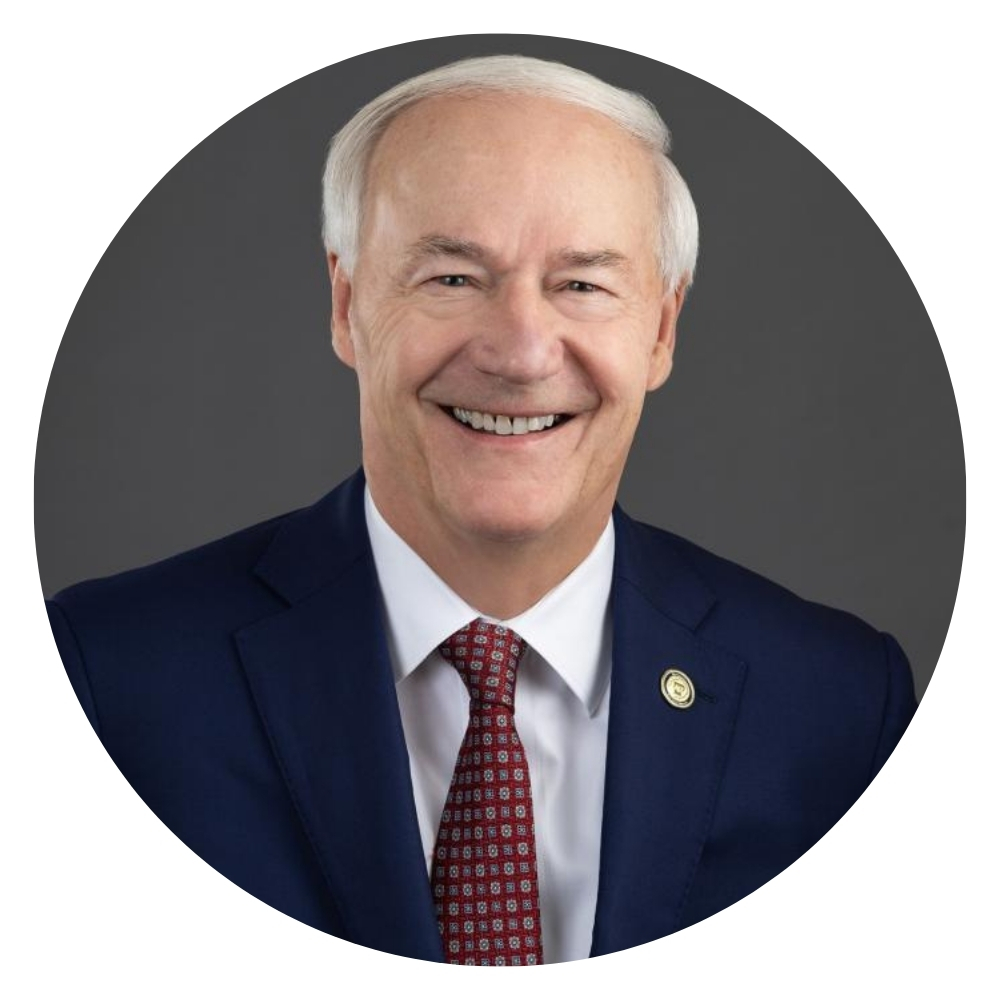
Asa Hutchinson served as the 46th governor of Arkansas and was re-elected in 2018. During his tenure, he positioned Arkansas as a national leader in computer science education, enacted over $250 million in tax cuts, and signed legislation exempting veterans’ retirement pay from state income tax. His leadership earned him the role of Chairman of the National Governors Association for 2021–2022, where his initiative focused on expanding computer science literacy.
Earlier in his career, President Ronald Reagan appointed Hutchinson as U.S. Attorney for the Western District of Arkansas. In 1996, he was elected to the U.S. House of Representatives, serving three terms before being appointed by President George W. Bush as director of the Drug Enforcement Administration and later as an undersecretary at the Department of Homeland Security. His background made him a trusted national voice on issues including trade, energy, education, and national security.
Governor Hutchinson is currently teaching, writing and speaking on health care issues and the importance of the rule of law and civil discourse in our society.
Christine Laine, MD, MPH

Christine Laine, MD, MPH, is Editor in Chief of Annals of Internal Medicine and Senior Vice President, American College of Physicians. She is Professor of Medicine in the Division of Internal Medicine at the Sidney Kimmel Medical College, Thomas Jefferson University in Philadelphia, where she is active in patient care and teaching.
Dr. Laine graduated summa cum laude, with a double major in biology and writing, from Hamilton College in Clinton, New York. She received her medical degree from State University of New York at Stony Brook and completed residency training in internal medicine at The New York Hospital (Cornell University) and a fellowship in general internal medicine and clinical epidemiology at Beth Israel Hospital (Harvard University). Dr. Laine earned her Master of Public Health degree, with a concentration in quantitative methods and clinical epidemiology, at Harvard University.
A leader in the world of medical journalism, she has held leadership positions in the International Committee of Medical Journal Editors, the Council of Science Editors, and the World Association of Medical Editors. She has been instrumental in the development of editorial policy about such issues as authorship, conflicts of interest in medical research, predatory publishing, and data sharing. Dr. Laine is a member of the US National Academy of Medicine.
Nita Mohanty, MD, MS

The American Academy of Pediatrics (AAP) is a non-profit professional organization of more than 67,000 primary care pediatricians, medical subspecialists, and surgical specialists dedicated to the health, safety, and well-being of all children. Dr. Mohanty serves as the Senior Vice President of Child Health Finance and Quality (CHFQ). She is responsible for providing leadership and strategic guidance to advance AAP initiatives in areas that include Pediatric Practice and Healthcare Delivery, Vaccines, Evidence Based Medicine, Child Health Finance and Payment, Quality and Safety, and Health Information Technology.
Dr. Mohanty joined the AAP in August of 2024. Prior to her role at AAP, she served as the Chief Health Impact Officer of a support organization to a large network of primary care centers across 19 states where she oversaw Practice Transformation, Quality and Safety, and Research initiatives with a focus on improving outcomes for patients and the workforce. She continues to provide patient care in Chicago. She is a Clinical Associate Professor at the Northwestern University Feinberg School of Medicine and has been a volunteer for global organizations with whom she provided care to families in 11 countries.
Dr. Mohanty completed her residency in Pediatrics at the University of Chicago and received an MS in Healthcare Quality and Patient Safety from the Northwestern University Feinberg School of Medicine. She completed a Science and Technology Policy fellowship with the American Association for the Advancement of Science in Washington, DC exploring the intersection of Health Information Technology and national heath priorities.
Saad Omer, MPH, PhD, MBBS

Dr. Saad B. Omer is the founding Dean of Peter O'Donnell Jr. School of Public Health at UT Southwestern in Dallas. He was previously the inaugural Director of Yale Institute for Global Health. Dr. Omer has conducted studies in the United States, Guatemala, Kenya, Uganda, Ethiopia, India, Pakistan, Bangladesh, South Africa, and Australia. Dr Omer’s research portfolio includes epidemiology of respiratory viruses such as influenza, RSV, and SARS-Cov-2; clinical trials to estimate efficacy of maternal and/or infant influenza, pertussis, polio, measles and pneumococcal vaccines; and trials to evaluate drug regimens to reduce mother-to-child transmission of HIV. Moreover, he has conducted several studies on interventions to increase immunization coverage. His work has also included public health preparedness strategies to effectively respond to large emerging and re-emerging infectious disease outbreaks. Dr Omer’s work has been cited in global and country-specific policy recommendations and has informed clinical practice and health legislation in several countries.
Dr. Omer has published widely in peer reviewed journals including the New England Journal of Medicine, JAMA, Lancet, Cell, Science, and Nature. Moreover, he has written op-eds for publications such as the New York Times, Politico, and the Washington Post.
Dr Omer was elected to the National Academy of Medicine and has received multiple awards – including the Maurice Hilleman Award by the National Foundation of Infectious Diseases for his work on the impact of maternal influenza immunization on respiratory illness in infants younger than 6 months- for whom there is no vaccine. He has served on the boards of trustees of Gavi the Vaccine Alliance and Sabin Vaccine Institute and advisory panels including the World Health Organization Strategic Advisory Group of Experts (SAGE) on Vaccines, U.S. National Vaccine Advisory Committee, the Presidential Advisory Council on Combating Antibiotic-Resistant Bacteria-Vaccine Innovation Working Group, and multiple National Academy of Medicine panels. Moreover, he served as an academic affiliate of the Office of Evaluation Sciences –formerly known as the White House Social and Behavioral Sciences Team.
Jason Schwartz, PhD

Jason L. Schwartz is an Associate Professor in the Department of Health Policy and Management at the Yale School of Public Health. His research examines vaccines and vaccination policy, decision-making in medical regulation and public health policy, and the structure and function of scientific expert advice to government. The overall focus of his work is on the ways in which evidence is interpreted, evaluated, and translated into regulation and policy in medicine and public health.
Schwartz’s publications have appeared in The New England Journal of Medicine, The Journal of the American Medical Association (JAMA), BMJ, The Lancet, Health Affairs, and elsewhere. He is also an author of the chapter titled “Ethics” in Plotkin's Vaccines, the leading textbook of vaccine science and policy, and editor of Vaccination Ethics and Policy: An Introduction with Readings. His research, analysis, and perspectives have appeared in the New York Times, Washington Post, CNN, NPR, BBC, and elsewhere.
Schwartz regularly teaches and lectures on vaccination policy and politics, health policy and the U.S. health care system, science advice to government, and related topics. During the COVID-19 pandemic, he was a member of Connecticut Gov. Ned Lamont’s COVID-19 Vaccine Advisory Group and chair of its Science Subcommittee, and he currently serves on an advisory committee to the Connecticut Commissioner of Public Health. He is a graduate of Princeton University (AB) and the University of Pennsylvania (MBE, PhD).
Patsy Stinchfield, MS, RN, CPNP

Patricia Stinchfield, MS, RN, CPNP, is a nationally recognized pediatric nurse practitioner and expert in pediatric infectious diseases, infection prevention, and immunization policy. Over a distinguished career spanning more than four decades at Children’s Hospitals and Clinics of Minnesota, she served as Director of Infectious Disease and Immunology and later as Senior Director of Infection Prevention and Control and the Children’s Immunization Project. In these roles, she led responses in multiple public health emergencies, including major measles outbreaks, the 2009 H1N1 influenza pandemic, and the COVID-19 pandemic as Incident Commander.
Stinchfield made national history as the first nurse appointed as a voting member of the CDC’s Advisory Committee on Immunization Practices (ACIP), serving from 2004–2008 and continuing as an ACIP liaison member for 15 additional years on behalf of the National Association for Pediatric Nurse Practitioners (NAPNAP). She is also the immediate Past President of the National Foundation for Infectious Diseases (NFID), where she contributed more than 15 years of leadership, education, and public engagement.
Today, Stinchfield is an independent consultant specializing in vaccination policy, infection control, and vaccine-preventable diseases, with a focus on measles and influenza. Widely published and a sought-after national speaker, she is known for advancing evidence-based strategies to strengthen vaccine confidence, improve clinical workflows, and reduce vaccine-related pain and anxiety.
A dedicated advocate, she also volunteers with Grandparents for Vaccines, promoting storytelling and community engagement to protect future generations.
Anne Zink, MD

Dr. Anne Zink is an Emergency Medicine physician in Palmer, Alaska, and a Senior Fellow at the Yale School of Public Health. She co-founded PopHIVE, a data integration platform, and serves as an advisor for the Brown STAT Network and the ECHO Emergency Response Network. She also sits on steering committees for the Vaccine Integrity Program, the Gov Act, the Common Health Coalition, and the Biosecurity Game Changer Coalition. Previously, she served as a Senior Advisor to The Pew Charitable Trusts on integration of Public Health and Medicaid data.
From 2018 to 2024, Dr. Zink served as Alaska’s Chief Medical Officer, leading the state through the COVID-19 pandemic and major public health reforms, including reorganizing the Department of Health and Social Services and advancing initiatives in complex care, chronic disease, infectious disease, and youth mental health.
A past president of the Association of State and Territorial Health Officials, Dr. Zink earned her B.A. from Bryn Mawr College and M.D. from Stanford University.